1. Event
1.1 Dashboard
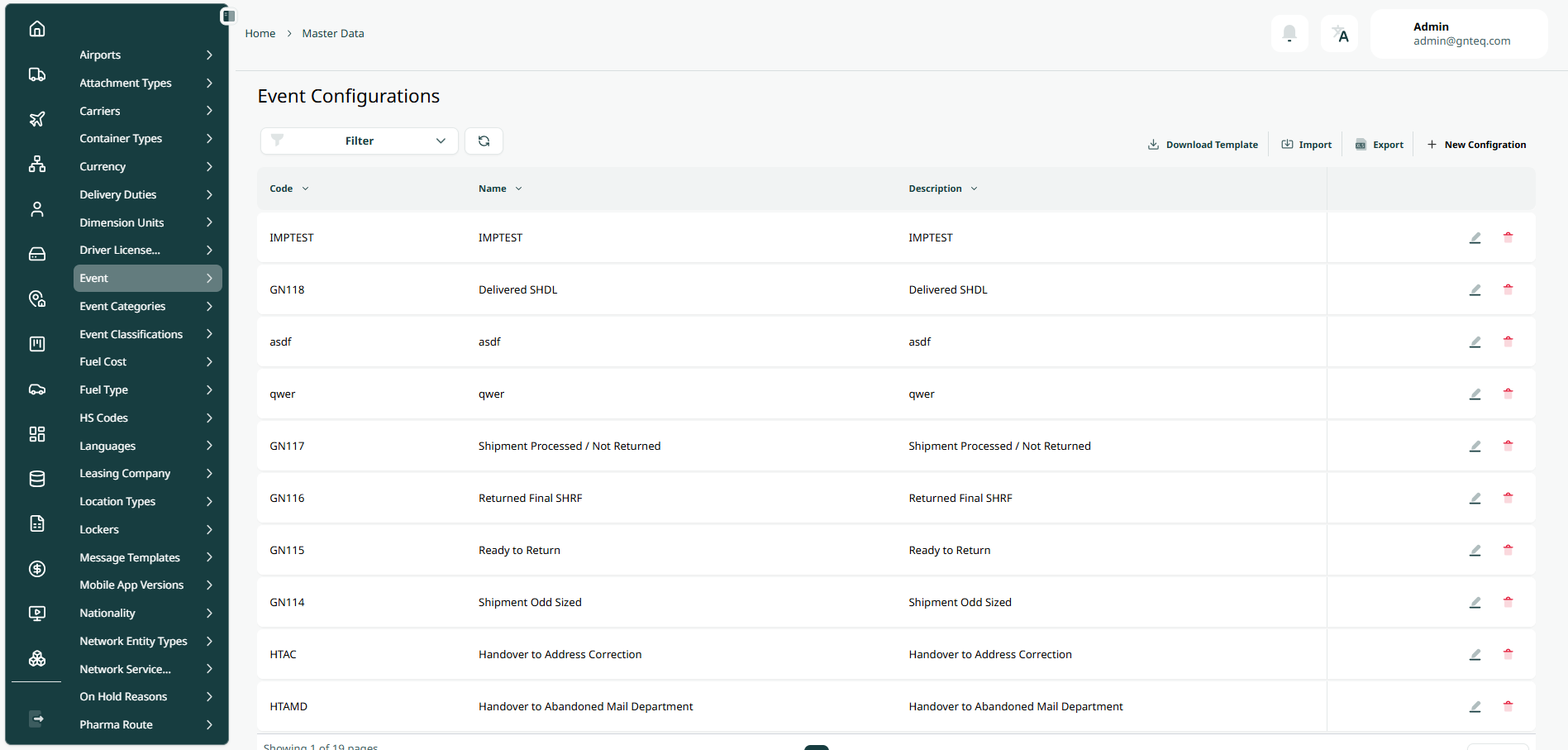
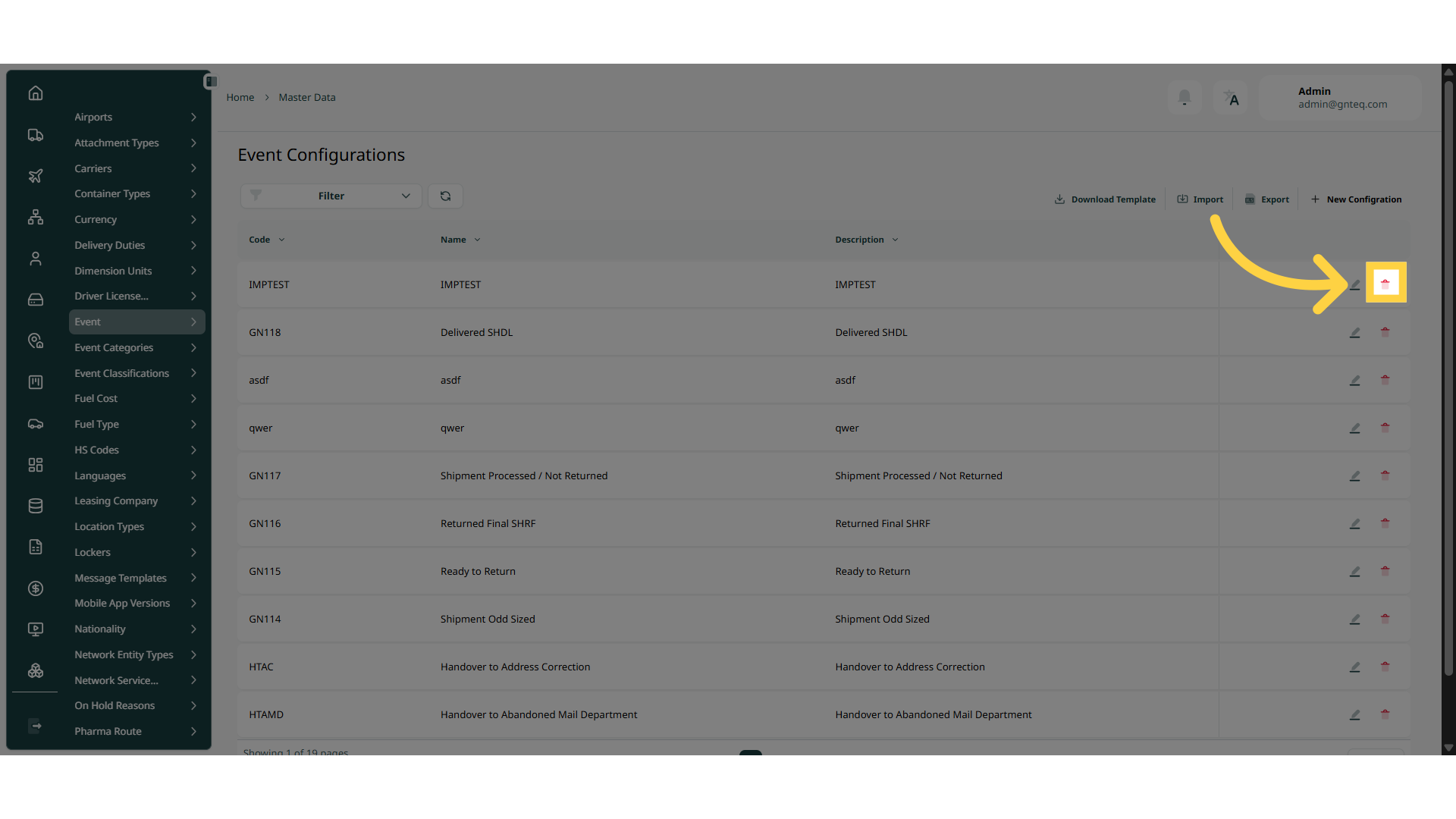
The user can view their defined events in the system by navigating to the ‘Event Configurations’ screen in the Master Data from the left navigation panel as follows:
-
New Event: the user can add a new event configuration by clicking New Configuration button.
-
Export: the user can export the list as an Excel file by selecting export button.
-
Import: the user can upload the list as an Excel file by selecting import button.
-
Download template: the user can click on ‘Download Template’ to download a certain detail from the dashboard.
-
Filters: the user can search for the shipment by the code, name…..etc.
-
Rows Per Page: the user can select the number of items to show on each page.
-
Action: by clicking on this button the user can edit, delete.
1.1.1 Edit Information
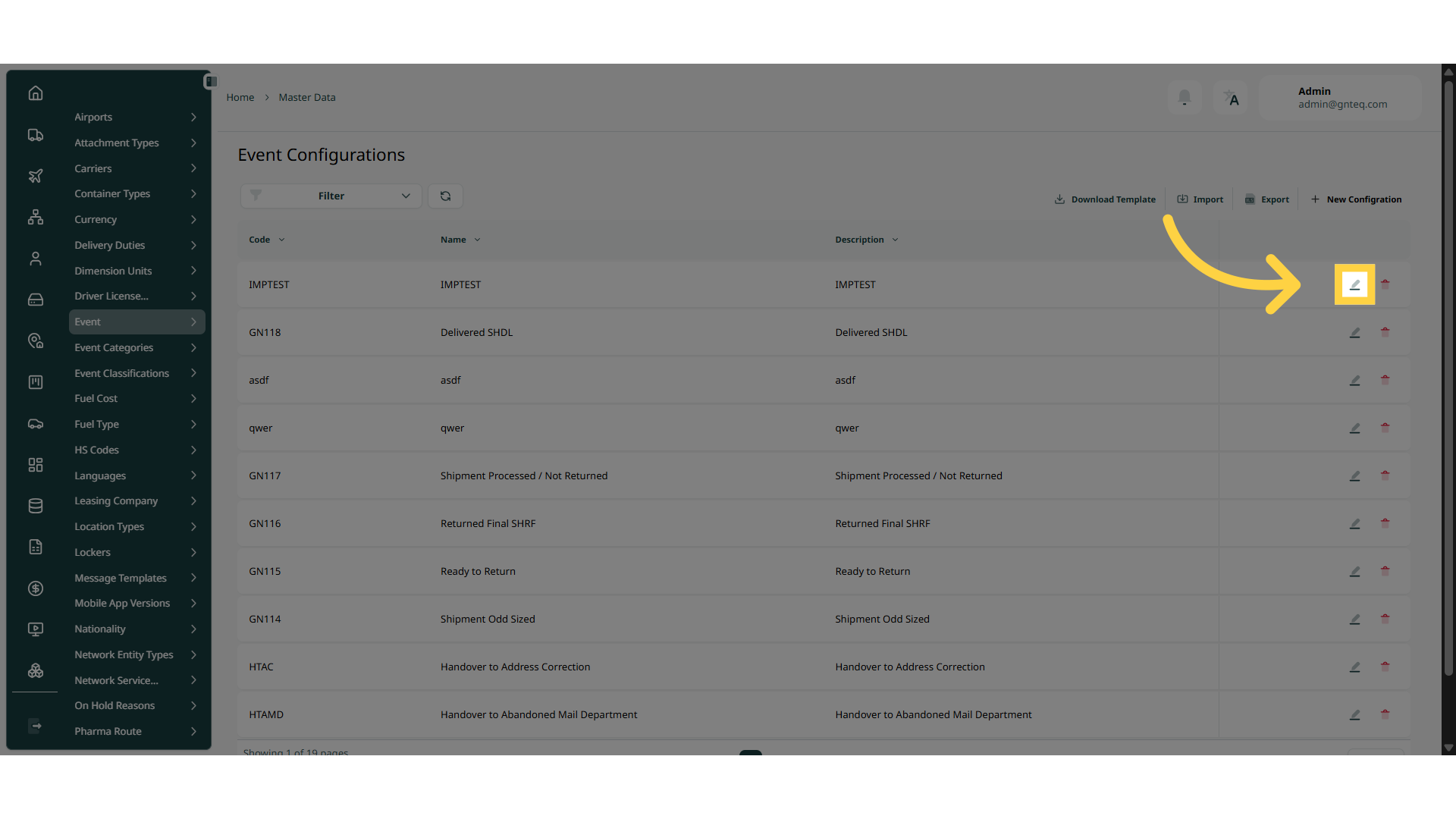
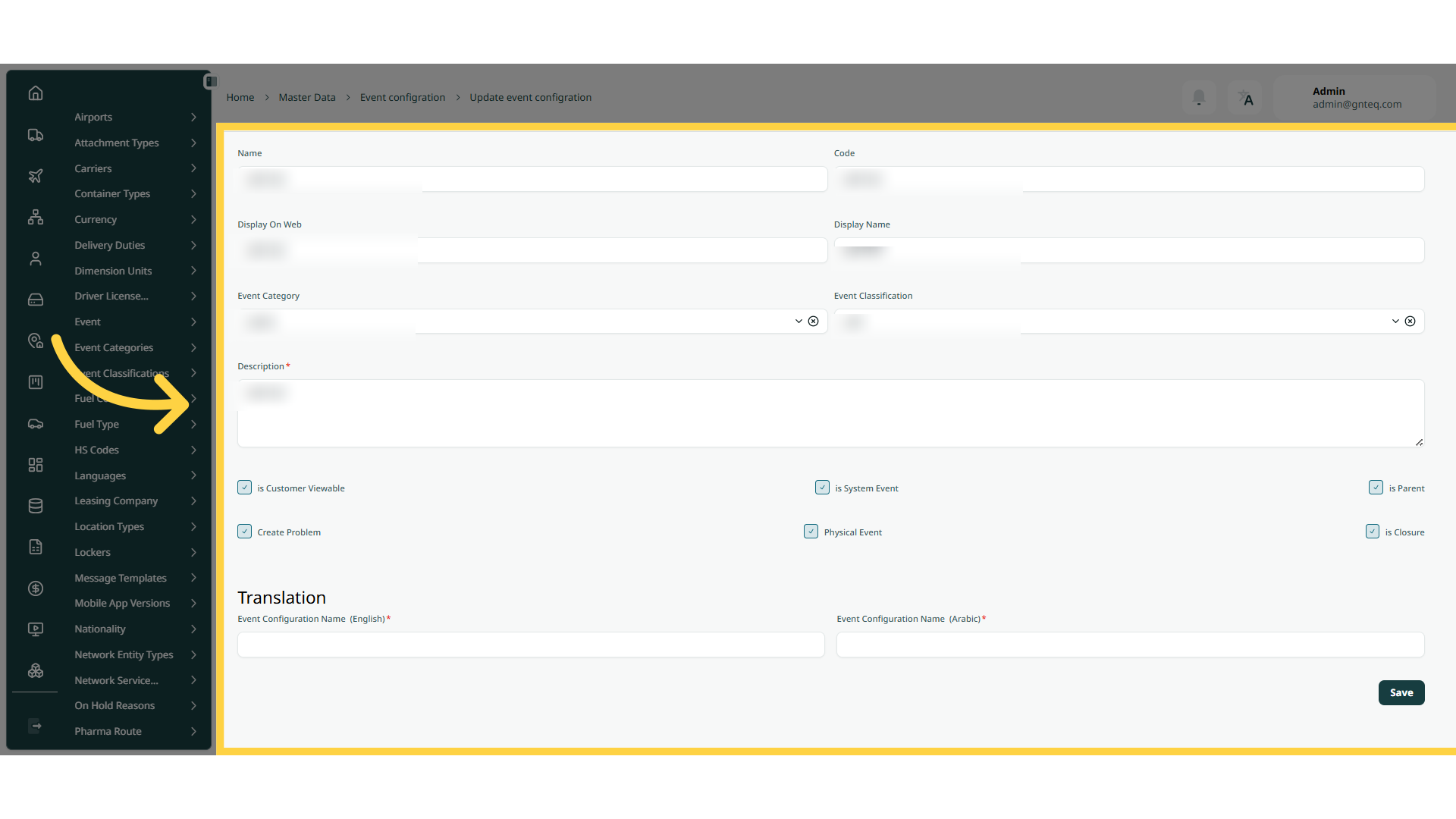
The user can edit the information of an existing event by clicking on Edit from Actions by navigating to the ‘Event Configurations’ screen via the Master Data.
1.1.2 Delete Event Configuration
The user can delete event configuration by clicking on Delete from Actions by navigating to the ‘Event Configuration’ screen via the Master Data.
1.2 Add New Configurations
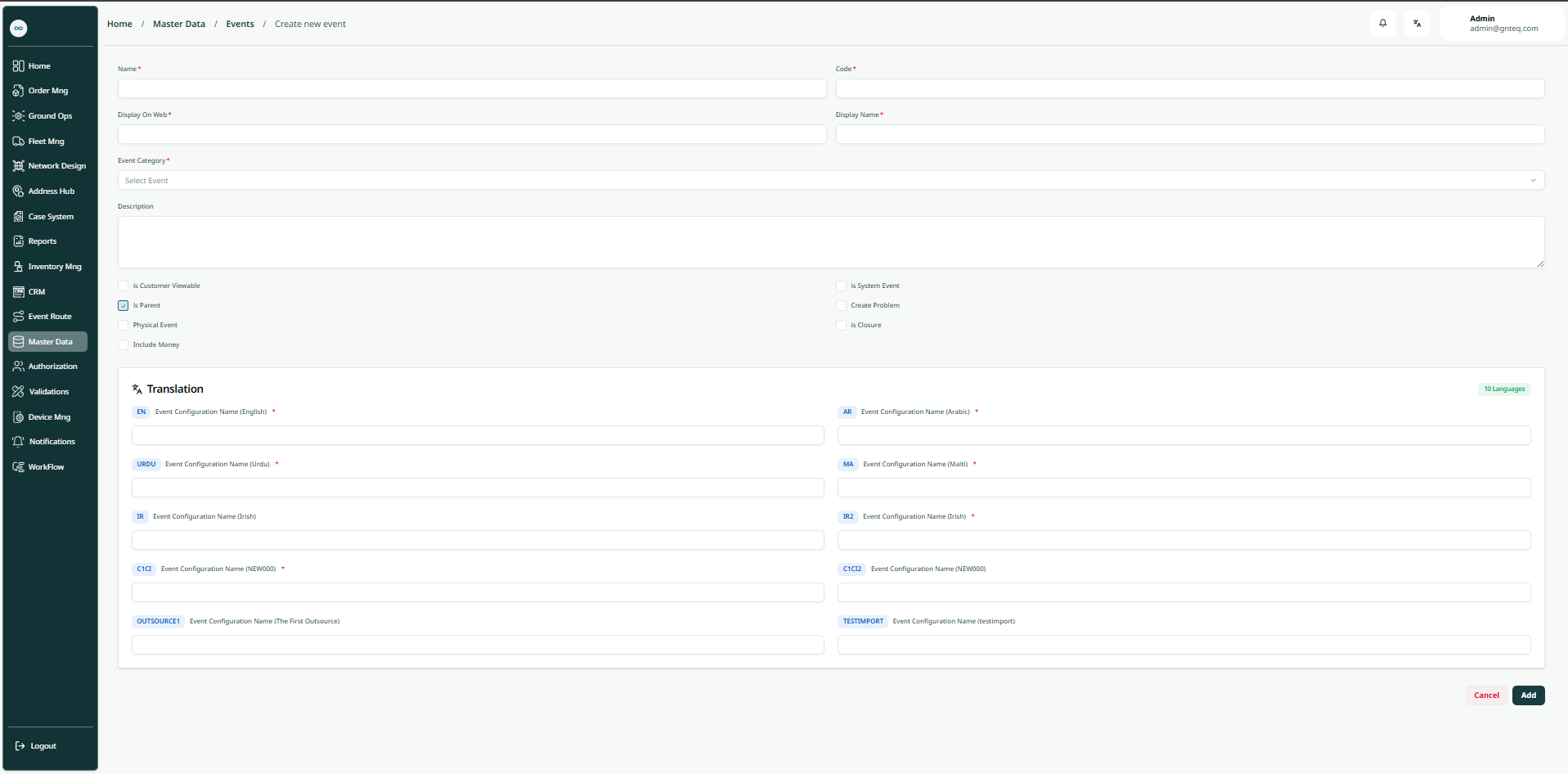
The user can create a new event configuration by clicking on New Configuration by navigating to the ‘Event Configurations’ screen via the Master Data.
-
Code: this field represents the event unique alphanumeric value.
-
Name: this field represents the event name.
-
Display Name: this field represents how the event name will be displayed.
-
Display on Web: this field represents that the event is viewable externally on all web applications.
-
Event Category: this field represent the category of the event.
-
Create Problem (checkbox): this field represent the event created can be applied to shipments encountering any problem within the shipment lifecycle.
-
Is Customer Viewable (checkbox): this field represents the event is viewable on the customer platform.
-
Is System Event (checkbox): this field represents the event is considered as a system event.
-
Is Closure (checkbox): this field represents that this event is the last event in the shipment cycle.
-
Physical Event (checkbox): this field represents that the created event is a physical event applied to the shipment.
-
Is Parent (checkbox): this field represents that the created event is a parent event, used to build event hierarchy and interrelate events.
-
Description: this field represents a detailed description of the event configuration.
-
Event Configuration Name (English): this field represents the event configuration name in english.
-
Event Configuration Name (Arabic): this field represents the event configuration name in arabic.
By clicking on Add the event configuration will be added successfully.